
TL;DR
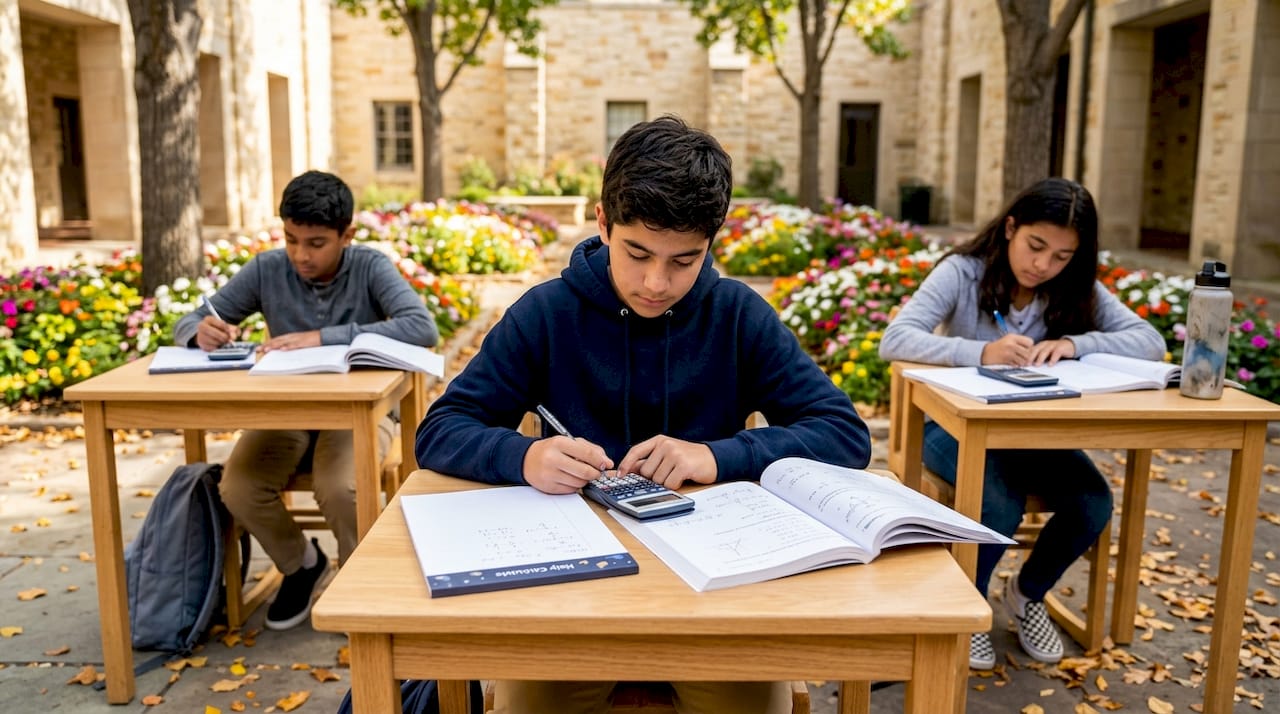
- •Calculator use in education has shifted from a tool seen as a shortcut to a strategic resource, influenced by research emphasizing purposeful integration.
- •Proper teacher guidance and assessment design are crucial to ensure calculators enhance understanding and problem-solving skills rather than create dependency.
- •The effectiveness of calculators depends more on pedagogical approach and policy alignment than on the tool itself.
Calculators were once strictly forbidden in most classrooms. Teachers worried they would make students lazy, undermine arithmetic skills, and produce graduates who couldn’t do basic math without a machine. Today, those same tools sit at the center of national curriculum debates, standardized testing policies, and teacher training programs. The shift didn’t happen overnight, and the controversy never fully went away. What changed is the evidence. Research now shows that how calculators are used matters far more than whether they are used at all, and that distinction is reshaping education policy from elementary school through college.
Key Takeaways
| Point | Details |
|---|---|
| Purposeful use matters | Calculator integration with teacher guidance boosts learning, not just computation. |
| Controversies remain | Debate continues over calculators possibly hindering core math skills versus promoting advanced problem-solving. |
| Evidence shows improvement | Research-backed calculator instruction leads to better performance and deeper problem-solving. |
| Assessment changes impact | Testing policies shape how calculators affect learning incentives and outcomes. |
| Tools extend beyond math | Calculators and digital tools now aid learning in science, finance, and practical contexts. |
How calculators transformed classroom learning
For most of the twentieth century, calculation was something students did entirely by hand. Long division, multi-step arithmetic, and trigonometric tables were core classroom skills. Calculators existed, but school boards, parents, and many teachers viewed them as shortcuts that bypassed real understanding.
The shift began gradually in the 1980s and accelerated through the 1990s as affordable scientific calculators became widely available. Curriculum bodies started recognizing that spending weeks drilling long division left less time for teaching students how to apply numbers to real problems. The argument was simple: if a professional engineer or accountant uses a calculator daily, why should students spend months mastering calculations they’ll never perform by hand in the real world?
Today, calculator integration looks different depending on where you teach and what you teach. Consider how policies vary:
- Elementary grades: Many schools still restrict or ban calculators to ensure students build foundational number sense and mental math fluency.
- Middle school: Limited calculator access is common, often tied to specific problem types where computation would otherwise slow down the learning objective.
- High school: Scientific and graphing calculators are standard in most countries, particularly for algebra, statistics, and pre-calculus courses.
- Standardized testing: Some national exams permit calculators on specific sections; others ban them entirely on foundational skills assessments.
The key policy insight is that purposeful calculator integration supports mathematics learning rather than replacing mental and hand calculation skills. This framing matters. It shifts the question from “should students use calculators?” to “when and how should students use calculators?”
“The question is not whether students should use calculators, but whether teachers are giving them the scaffolding to think while they calculate.”
This distinction drives everything. A student who uses a calculator to check an answer they already estimated mentally is building mathematical reasoning. A student who reaches for the calculator before considering the problem is developing a dependency, not a skill. Teachers and school leaders who understand this difference can design lessons where the math calculators serve as learning tools, not crutches.
Debate: Are calculators helping or hindering math skills?
With historical context established, this section unpacks the main controversies over calculator impact on math learning.
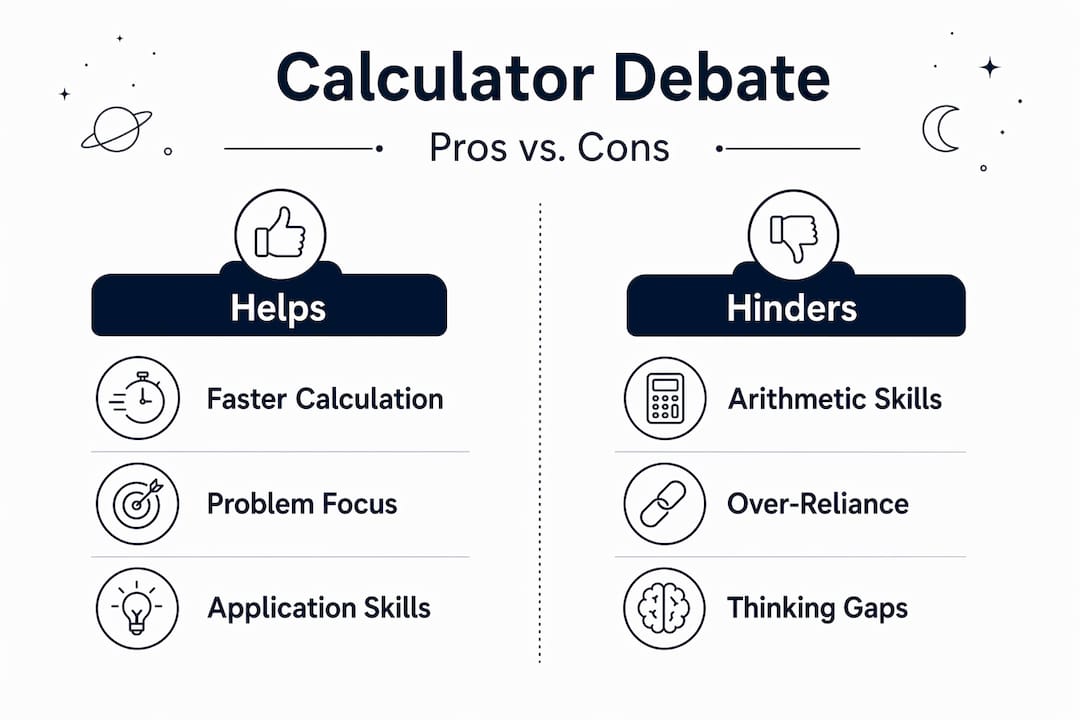
The academic debate over calculator use is sometimes called the “math wars,” a term that captures the genuine intensity of disagreement between educators, parents, and researchers. At its core, the conflict is about what math education is for. One side argues that fluency with algorithms and arithmetic procedures is foundational. The other argues that the purpose of math education is to develop reasoning and problem-solving capacity, not to replicate what computers do faster.
Here’s how the two positions compare:
| Argument | Pro-calculator position | Anti-calculator position |
|---|---|---|
| Arithmetic fluency | Computation tools free cognitive load for deeper thinking | Students lose procedural fluency without regular practice |
| Problem-solving | Calculators allow tackling more realistic, complex problems | Students skip reasoning steps and rely on tool output |
| Math attitudes | Removes fear around number crunching | Creates false confidence without understanding |
| Long-term skills | Prepares students for technology-rich workplaces | Foundational gaps appear in higher-level math courses |
Policy stances reflect these tensions directly. In the United States, calculator policies differ by state, by district, and often by individual teacher. The College Board permits calculators on certain SAT math sections but not others. The ACT permits them throughout the math section. The UK’s GCSE exams include both calculator and non-calculator papers. Each of these choices signals a belief about what mathematical skill looks like at that level.
The practical guidance most educators and researchers agree on follows a clear sequence:
- Establish core number sense and mental math skills before introducing calculators at any grade level.
- Use calculators for problems where the computation is not the learning objective.
- Require students to estimate answers before calculating to preserve reasoning habits.
- Design assessments that test both calculator-assisted and non-calculator performance separately.
- Discuss with students why they’re using the calculator on a given task, so use stays intentional.
Pro Tip: Try assigning “calculator justification” tasks where students must explain in writing what the calculator told them and why they trust the result. This simple practice transforms passive tool use into active reasoning and works at every grade level.
Understanding algorithm strategies alongside calculator use helps students recognize what the machine is actually doing, which strengthens rather than weakens their conceptual understanding.
Evidence-based impacts: Performance and problem-solving
After analyzing the debate, we turn to evidence showing how calculators affect student outcomes.
Research findings in this area are more nuanced than either side of the debate usually admits. The strongest results don’t say “calculators help” or “calculators hurt.” They say context determines outcome.
A key finding from research on graphing calculators shows that conceptual problem-solving instruction paired with calculator use produces measurable improvements in algebra performance. When calculators are introduced alongside instruction that targets reasoning and concept formation, not just computation, students show stronger outcomes in related algebra skills than those receiving traditional instruction alone.
What the data shows across studies:
- Computation scores: Mixed results; some studies show small declines in mental arithmetic when calculators are used throughout instruction.
- Algebra and reasoning: Consistent positive results when instruction emphasizes concepts.
- Problem-solving speed: Improves reliably, allowing students to tackle more complex, multi-step problems in the same timeframe.
- Math attitudes: Less consistent; some students report reduced math anxiety, while others show no measurable attitude change.
| Outcome measure | Effect with calculator | Effect without calculator |
|---|---|---|
| Algebra problem-solving | Positive, especially with conceptual focus | Moderate, dependent on computation fluency |
| Mental arithmetic | Slight decline in some studies | Maintained or improved |
| Multi-step problem completion | Significantly higher | Lower due to computation time |
| Math confidence | Slight improvement in some groups | Variable |
The instruction style finding is particularly important for teachers. A calculator placed in a student’s hand without changing how a lesson is taught produces weak or neutral results. The same calculator used in a lesson redesigned around reasoning and application produces significantly better outcomes. The tool doesn’t drive the result. The teaching does.
This connects directly to practical classroom tools like compound interest calculators, which can help students visualize exponential growth in ways that hand calculation makes tedious. When paired with questions that ask students to explain the pattern they observe, the calculator becomes a vehicle for conceptual understanding.
Calculators beyond math: Facilitating learning across subjects
Calculator benefits extend beyond math class. Let’s look at their role in wider educational subjects.
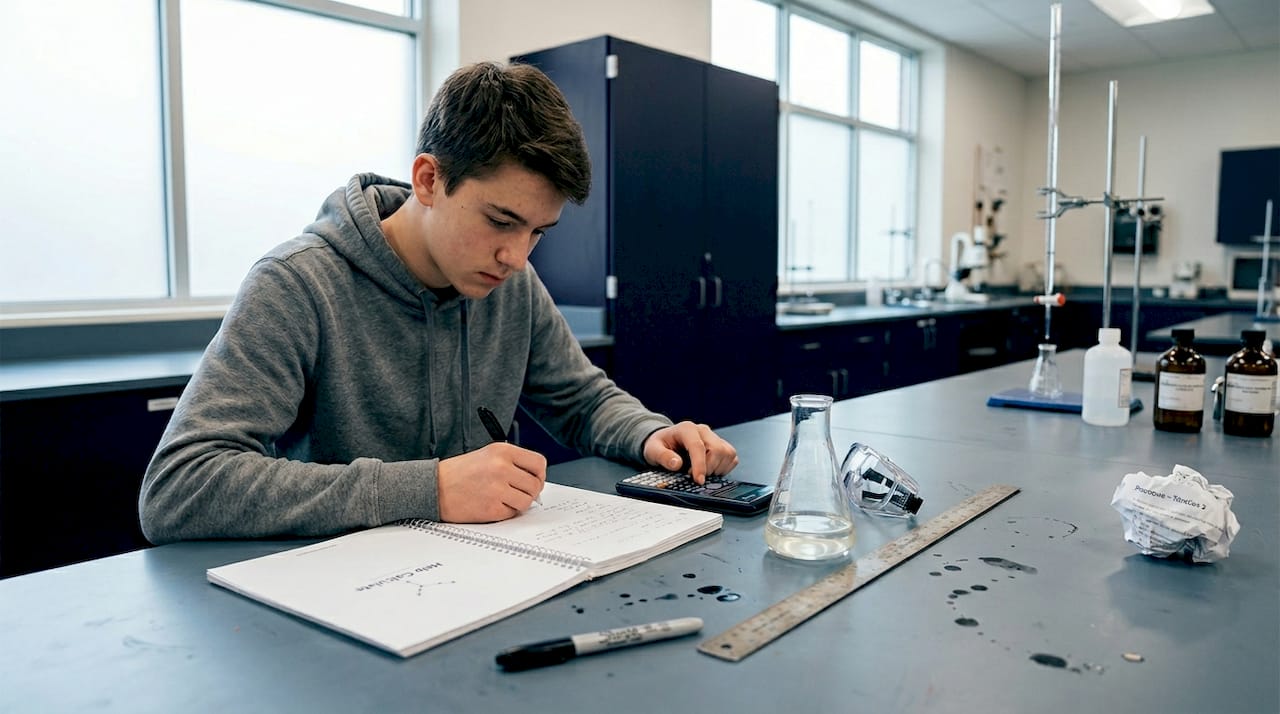
Most of the public debate focuses on math, but calculators and digital tools are equally relevant in science, personal finance education, and practical vocational training. The evidence from cross-subject studies adds important texture to the overall picture.
Research using structured teaching experiments with digital tools shows that calculator-like tools in structured contexts improve students’ ability to grasp problem situations and apply techno-mathematical strategies across subjects. However, this improvement doesn’t automatically extend to all aspects of mathematical thinking. Justification, explanation, and communication of reasoning often remain underdeveloped even when problem comprehension improves.
Specific applications where calculator tools strengthen learning across subjects include:
- Physics and chemistry: Calculating reaction rates, force vectors, or energy values without a calculator forces students to simplify problems to the point of unrealism. Calculators allow instruction to use real-world data.
- Economics and personal finance: Compound interest, loan amortization, and budget analysis require repeated calculation over time. Tools like financial calculators make these concepts accessible to high school students without calculus backgrounds.
- Statistics: Modern data analysis in any subject relies on digital tools. Teaching students to interpret outputs accurately requires exposure to the tools during instruction.
- Vocational and technical education: Electricians, builders, and healthcare workers all use calculators professionally. Training without them creates an unnecessary gap between classroom and workplace.
Pro Tip: When using calculators in science or finance lessons, always ask students to record what they expected the answer to be before calculating. This one habit forces engagement with the problem and catches conceptual errors that the calculator would otherwise mask.
The finance calculator widgets available for classroom use let teachers present real financial scenarios without getting bogged down in arithmetic, while still requiring students to interpret and apply results. Similarly, math practice games can reinforce the mental math fluency that makes calculator results interpretable rather than just accepted.
Assessment matters: How testing policies influence calculator effects
Finally, we analyze how testing and assessment policies change the real impact of calculators in education.
Testing policy is arguably the most powerful driver of how calculators are used in classrooms. Teachers inevitably prepare students for what exams measure. When exams permit calculators throughout, instruction tilts toward problem-solving and application. When exams exclude calculators, instruction focuses more heavily on procedures and mental math. Neither approach is inherently wrong. The problem arises when the exam policy and the stated learning objectives point in different directions.
Assessment design strongly influences how calculators function in learning environments. When certificate or exam performance is the measured outcome, the availability of approved tools changes both what students practice and what they actually learn. This creates a feedback loop: policy shapes practice, practice shapes learning, and learning shapes what students can do with or without a calculator.
Practical steps for educators to align calculator policy with learning goals:
- Identify which learning objectives require computation fluency and design non-calculator assessments specifically for those.
- Use calculator-permitted assessments for objectives that center on reasoning, modeling, or application.
- Communicate clearly to students why each assessment format is used, so they develop intentional habits rather than guessing what’s expected.
- Review calculator policies annually against student performance data to identify unintended gaps.
- Consider mixed-format exams that include both calculator and non-calculator sections to build comprehensive skill profiles.
A consistent finding across national education reviews is that students who experience well-designed mixed-format assessment develop stronger overall math skills than those in either fully permissive or fully restrictive calculator environments. The balance itself, rather than any single position, drives better outcomes. The math assessment calculators available online can support practice in either format, depending on how teachers configure the tasks they assign.
Our take: What most educators miss about calculator policies
Most of the public conversation about calculators treats the tools as the central variable. Educators, parents, and policy makers ask whether calculators should be allowed or banned, as if the technology is driving the outcome. After looking closely at the evidence and the range of classroom experiences, the clearer conclusion is that the technology matters far less than the teaching.
A graphing calculator in the hands of a student following rote procedures produces rote thinking. The same calculator in a lesson designed around questioning, reasoning, and real-world application produces measurably better conceptual understanding. The calculator didn’t change. The instruction did.
What most educators miss is that calculator policy debates are often really proxy debates about pedagogy. Schools that ban calculators are frequently trying to protect procedural instruction time. Schools that embrace them are often trying to shift toward applied problem-solving. Both goals are legitimate. The mistake is thinking the tool enforces the pedagogy.
The second thing most educators miss is the role of assessment in locking in whatever approach the school takes. If every high-stakes exam permits graphing calculators, teachers will spend instructional time on calculator-specific strategies. If exams never permit them, teachers will drill procedures. Assessment design is the most powerful lever in the system, and it rarely gets as much attention in these debates as the calculator itself.
Our recommendation is straightforward. Use clear math frameworks to guide which objectives call for calculator use and which call for fluency practice. Build assessment formats that measure both. Then train teachers not just on how to use calculators in lessons, but on how to scaffold student thinking while using them. That combination produces results that neither pure prohibition nor pure permissiveness achieves on its own.
Explore calculators and tools for students and teachers
Whether you’re preparing a lesson plan or working through a problem set, having reliable calculation tools at your fingertips makes a real difference.
HelpCalculate.com offers over 60 free calculators built for practical use in education and beyond. Students and educators can access math calculators covering everything from basic arithmetic to advanced algebra, alongside a full suite of science calculators for physics, chemistry, and more. For finance and economics instruction, the free finance widgets make it easy to model real-world scenarios like loan payments and compound interest directly in a lesson or assignment. All tools are free, browser-based, and designed for quick, accurate results with no app download required.
FAQ
Do calculators help students learn math better?
Calculators boost performance when used to support conceptual problem-solving, but they need teacher guidance to ensure they supplement rather than replace foundational mental math skills.
What types of calculators are used in schools?
Schools use basic, scientific, and graphing calculators, with policies varying by grade level and exam type based on differing views on whether calculators hinder foundational arithmetic or promote higher-order thinking.
Can calculators improve science or finance learning?
Yes. Digital tools in structured teaching improve students’ ability to understand problem situations and apply practical strategies in science and finance, particularly when reasoning is explicitly required alongside tool use.
How do testing policies affect calculator use?
Exam rules determine which calculators are permitted and what skills are measured, and assessment design directly shapes the learning behaviors and incentives students develop throughout their instruction.
Related calculators
Related posts
Math
Fraction calculators: Save time and ensure precision
Discover why use fraction calculators to eliminate errors and save time in calculations. Get instant, precise results with step-by-step breakdowns!
Math
Prime Factorization Explained: Steps, Algorithms, Strategies
Master prime factorization with clear steps, algorithms, and strategies. Unlock confidence in advanced math and tackle challenging numbers!
Math
How to divide decimals: a step-by-step guide
Learn how to divide decimals effectively with this step-by-step guide. Master key techniques and boost your confidence in calculations!