
TL;DR
- •Choosing the right mulch type, depth, and application method significantly improves soil health, plant performance, and weed control.
- •Organic mulches feed the soil as they decompose, while inorganic options last longer but do not provide nutrients and can increase urban heat.
- •Proper maintenance involves avoiding excessive layering, keeping mulch away from plant stems, and regularly checking and topping up mulch layers.
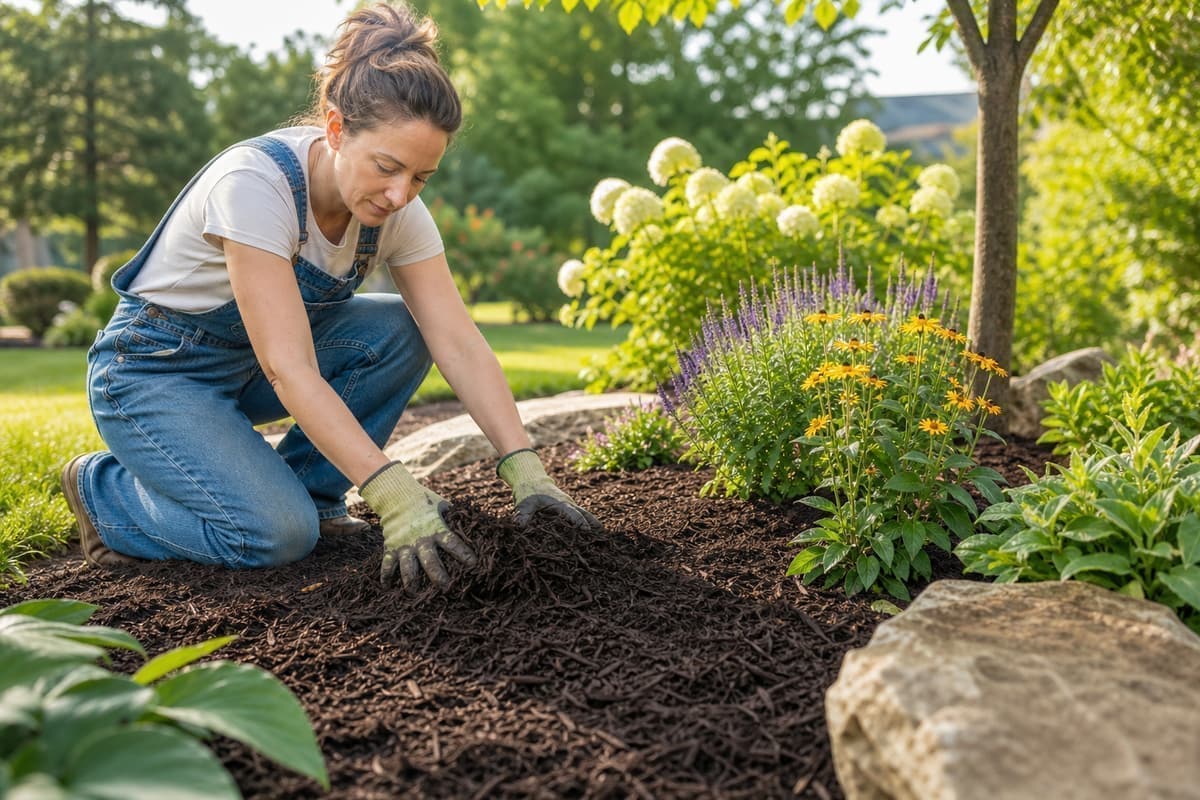
Most homeowners treat garden mulch as an afterthought. You spread some wood chips, call it done, and wonder why your plants still struggle in summer heat or why weeds keep pushing through. The truth is that the type of mulch you choose, how deep you apply it, and when you refresh it makes a real difference to soil health, water use, and plant performance. This guide walks you through every practical decision: which mulch suits which garden, how to apply it correctly, and the mistakes that quietly undo all your effort.
Calculate how much mulch you need
Enter bed dimensions and depth to get cubic yards, cubic feet, and bag counts before you order bulk or bagged mulch.
Open the Mulch CalculatorKey takeaways
| Point | Details |
|---|---|
| Match mulch to garden type | Compost works best for vegetable beds; shredded bark suits perennial flower beds. |
| Depth matters more than coverage | Apply 2 to 4 inches deep; going thicker can stunt growth and repel water. |
| Organic mulch feeds your soil | Wood chips, straw, and compost break down and add nutrients; inorganic options do not. |
| Avoid volcano mulching | Keep mulch 2 to 3 inches away from tree trunks and plant stems to prevent rot. |
| Free mulch is widely available | Local arborists, composted yard waste, and extension programs offer low-cost or no-cost options. |
Garden mulch types: organic vs. inorganic
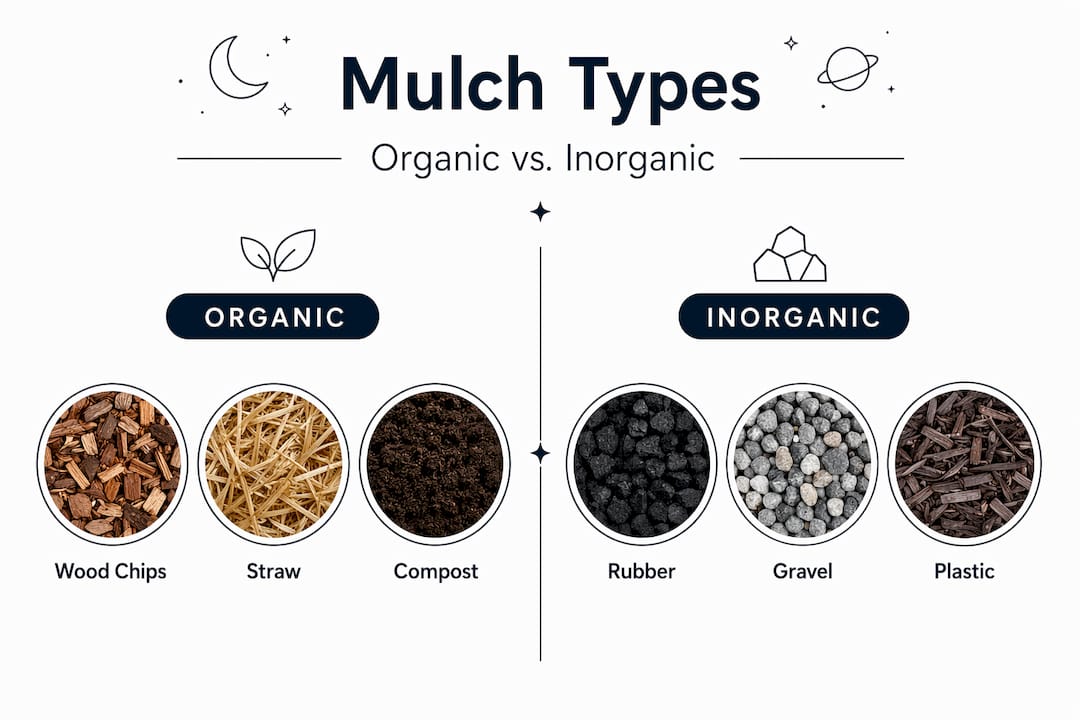
Not all mulch is the same material, and that distinction matters more than most gardeners realize. Mulch falls into two broad categories: organic and inorganic. Organic mulch breaks down over time, adding nutrients and improving soil structure. Inorganic mulch does not decompose, which means it lasts longer but gives nothing back to the soil.
Common organic mulch options include wood chip mulch, shredded bark, straw, grass clippings, dried leaves, pine needles, and compost. Each has a different lifespan. Wood chips and bark last roughly 1 to 2 years, straw and pine needles hold up for 6 to 12 months, and grass clippings break down fast and need replacing every 2 to 8 weeks. Compost is the most nutrient-dense option but disappears into the soil quickly and needs regular topping up.
Inorganic landscape mulch types include rubber mulch, gravel, crushed stone, and black plastic sheeting. These materials last for years with minimal maintenance, but inorganic mulches increase urban heat, provide zero nutritional benefit to soil, and can worsen drainage and runoff. Experts caution against using rubber or gravel in planting beds where soil health matters. Save those materials for pathways or decorative areas where plants are not the priority.
| Mulch type | Lifespan | Soil benefit | Cost | Best use |
|---|---|---|---|---|
| Wood chip mulch | 1 to 2 years | Medium | Low to free | Trees, shrubs, pathways |
| Shredded bark | 1 to 2 years | Medium | Low to moderate | Perennial beds, flower beds |
| Straw | 6 to 12 months | Low to medium | Low | Vegetable gardens |
| Grass clippings | 2 to 8 weeks | Medium | Free | Vegetable beds, compost layer |
| Compost | 3 to 6 months | High | Low to moderate | Vegetable gardens, new beds |
| Pine needles | 6 to 12 months | Low (acidic) | Low to free | Acid-loving plants |
| Rubber mulch | 5 to 10 years | None | High | Playgrounds, paths |
| Gravel or stone | Indefinite | None | Moderate to high | Decorative, drainage areas |
Benefits of mulching your garden
Mulch does several jobs at once, and understanding all of them helps you use it more deliberately.
- Moisture retention. A proper mulch layer slows evaporation from the soil surface, which means you water less often and plants stay hydrated longer between rain events. This is especially valuable during dry summers.
- Temperature regulation. Mulch insulates the soil. It keeps roots cooler in summer and warmer in fall, reducing stress on plants during temperature swings.
- Weed suppression. A consistent layer blocks sunlight from reaching weed seeds in the soil. This does not eliminate weeds entirely, but it significantly reduces the time you spend pulling them.
- Soil enrichment. Organic mulch breaks down slowly and feeds soil microorganisms, improves soil structure, and adds organic matter over time. This is a benefit that inorganic options simply cannot match.
- Erosion control. Mulch absorbs the impact of rain and slows water runoff, which protects topsoil in sloped beds or areas with heavy rainfall.
The benefits of mulching are real, but they depend on correct application. Two common mistakes cancel out most of the gains. First, applying mulch too thick. Optimal mulch depth is 2 to 4 inches; going beyond 4 inches can actually dry out soil by forming a dense layer that repels water rather than holding it. Second, volcano mulching, which means piling mulch up against tree trunks or plant stems. This traps moisture against the bark and creates conditions for rot and fungal disease.
Pro Tip: If your garden soil feels dry despite regular mulching, press your hand into the mulch surface. If it feels crusted or matted and water beads on top rather than soaking through, your mulch has become hydrophobic. Rake it up, break it apart, and apply a fresh thin layer on top.
How to choose the best garden mulch
The best garden mulch depends on what you are growing, where you live, and what you want the mulch to do. There is no single answer, but there are clear patterns that work.
- Mulch for vegetable garden beds: Compost is the top choice because it feeds plants as it breaks down. Straw is a close second since it is light, easy to move when planting, and breaks down without robbing nitrogen from the soil. Avoid fresh wood chips in vegetable beds because fresh wood chips cause nitrogen tie-up and can harm plants; well-aged chips are safer.
- Mulch for flower beds: Shredded bark or finely ground bark mulch looks clean, lasts through the season, and suppresses weeds well in perennial beds. It is the most popular landscape mulch type for ornamental areas.
- Acid-loving plants: Pine needles are a natural fit for blueberries, azaleas, and rhododendrons. They break down slowly and gently acidify the soil.
- High-humidity or wet climates: Pine needles and coarser wood chips allow better airflow than fine or dense materials, reducing the risk of fungal problems at the soil surface.
Budget is a real factor for many homeowners. Mulch does not have to be expensive. Free mulch from local arborists, dried leaves raked from your own yard, grass clippings from mowing, and municipal composting programs all provide usable material at little or no cost. University extension programs in many states also offer free wood chip delivery programs. Calling a local tree service is often the fastest way to get a truckload of wood chips dropped at your property for free.
Pro Tip: Mixing two mulch types often gives better results than using one alone. Try layering compost directly on the soil surface and covering it with a thin layer of wood chips or straw. The compost feeds the soil while the top layer holds moisture and suppresses weeds.
How to apply mulch correctly
Getting the application right is just as important as picking the right material. Follow these steps for results that actually hold up through the season.
- Clear the area first. Pull existing weeds before you mulch. Mulch slows new weeds but will not kill established ones already rooted in the soil.
- Loosen compacted soil. If the soil surface is hard, turn it lightly with a fork or hoe before applying mulch. This improves water penetration once the mulch is in place.
- Apply at the right depth. Spread mulch 2 to 4 inches deep across the bed. Use the lower end of that range near plant stems and the higher end in open areas between plants.
- Keep mulch away from stems and trunks. Keep a 2 to 3 inch buffer between mulch and any tree trunk or plant stem. Piling mulch against bark traps moisture and invites disease.
- Water after applying. Lightly water the mulched area after application to help it settle and begin doing its job.
Timing matters too. Spring is the most common time to mulch, right after the soil warms up. A fall application helps protect roots through winter and reduces frost heave. In summer, topping up thin or compacted areas keeps moisture retention working through the hottest months.
To check whether your mulch needs refreshing, push a finger through the surface layer. If you hit compacted, matted material that resists your finger or if the layer has thinned to less than an inch, it is time to add more. Compacted mulch repels water and needs to be raked loose or replaced before it starts working against you.
Pro Tip: Do not remove old organic mulch before adding new material unless it is heavily matted or diseased. The decomposing layer underneath is actively feeding your soil. Simply rake it loose and top it up.
Common mulch mistakes to avoid
Even experienced gardeners make these errors. Recognizing them early saves you time and protects your plants.
- Applying too thick a layer. More than 4 inches creates an anaerobic zone at the soil surface that suffocates roots and prevents water from reaching the soil. Stick to the 2 to 4 inch range.
- Volcano mulching around trees. Piling mulch high against a tree trunk promotes rot and fungal infections and can eventually kill the tree. Keep it flat and keep it away from the bark.
- Using fresh wood chips in vegetable beds. Fresh, unaged wood chips draw nitrogen out of the soil as they decompose, starving your vegetables. Use well-rotted chips or choose straw and compost instead.
- Using inorganic mulch in planting beds. Rubber and gravel look tidy but add no organic matter, can increase soil temperature, and make it harder to plant or amend soil later.
- Ignoring compaction. Mulch that has crusted over stops doing its job. Matted mulch surfaces repel water and should be broken up or replaced rather than covered with a fresh layer on top.
Pro Tip: If you notice standing water on top of your mulch after rain, that is a clear sign the layer has compacted and become water-repellent. Rake it thoroughly before the next watering or rain event.
My take on mulching after years of gardening
I have watched homeowners spend real money on plants, fertilizer, and irrigation systems while skimping on mulch or applying it wrong. In my experience, mulch is the single most cost-effective thing you can do for a garden bed, but only when you treat it as an active part of your soil system rather than a decorative finish.
What I have found is that most mulch problems come from two habits: applying too much and never checking it again. People pile it on in spring, assume the job is done, and then wonder why plants look stressed by August. The mulch has crusted over, water is running off the surface, and roots are cooking underneath.
My honest recommendation is to spend less time choosing the "perfect" mulch and more time checking it every few weeks. Rake it, top it up, and keep it off the stems. A modest layer of free wood chips from a local arborist, applied correctly and maintained through the season, will outperform expensive bagged mulch applied carelessly. The material matters less than the practice.
- Michael
Plan your mulch order with Helpcalculate
Before you buy garden mulch in bulk, knowing exactly how much you need saves money and prevents waste. Helpcalculate offers free tools that make this straightforward. Use the volume calculator to calculate the cubic footage or cubic yards of mulch your beds require based on their dimensions and your target depth. If you are working with measurements in different units, the unit conversion tools at Helpcalculate handle length, weight, and volume conversions quickly. Getting the numbers right before you order means you buy the right amount the first time, whether you are purchasing bagged mulch or arranging a bulk delivery.
FAQ
What is the best depth for garden mulch?
The recommended depth is 2 to 4 inches. Going deeper than 4 inches can prevent water from reaching the soil and may stunt plant growth.
Can you use fresh wood chips in a vegetable garden?
Fresh wood chips are not recommended for vegetable beds because they can cause nitrogen tie-up in the soil as they decompose. Use well-aged wood chips, straw, or compost instead.
How often should you replace or refresh mulch?
It depends on the material. Wood chips and bark last 1 to 2 years, while straw and pine needles need refreshing every 6 to 12 months. Check your mulch layer regularly and top it up when it thins below 1 inch or becomes compacted.
What is volcano mulching and why is it harmful?
Volcano mulching means piling mulch high against a tree trunk. It traps moisture against the bark, promotes rot and fungal infections, and can seriously damage or kill the tree over time.
Where can you get free or low-cost garden mulch?
Local tree services and arborists often provide free wood chip deliveries. Dried leaves, grass clippings, and municipal composting programs are other no-cost or low-cost sources worth checking in your area.
Recommended on Help Calculate
Related calculators
Related posts
Home
It's Earth Day. Here's What Going Green Actually Costs - and Where You Actually Save.
Going green is a financial planning exercise too: solar, EVs, and heat pumps have upfront costs, credits, and break-even timelines. Here is the math on bills, break-even years, opportunity cost, carbon and trees, and what waiting costs.
Home
Gen Z Cut the Cord to Save Money. Then Streaming Got Expensive. Is It Still Worth It?
A numbers-first look at streaming savings versus cable, and why cutting subscriptions and coffee still does not solve the housing affordability gap facing Gen Z.