

TL;DR
- •Gas from eating broccoli is a normal digestive process caused by fermentation of fiber and sulfur compounds in the gut.
- •Individual microbiome differences and dietary habits influence the intensity and odor of the resulting gas.
- •Proper preparation and gradual dietary adjustments can reduce discomfort.
- •Broccoli’s health benefits outweigh the minor inconvenience of odor.
- •Managing intake and preparation methods supports overall gut health.
If you’ve noticed your gas smells unmistakably like broccoli after a meal, you’re not alone and nothing is wrong with you. This is one of the most common yet least talked about digestive experiences, and it has a clear, well-understood biological explanation. Your body is doing exactly what it’s supposed to do when it encounters fiber-rich, sulfur-containing vegetables. This article breaks down the science behind broccoli-scented gas, explains what’s happening in your gut, identifies when you might want to pay closer attention, and gives you practical steps to manage it if the odor bothers you.
Key Takeaways
| Point | Details |
|---|---|
| Broccoli gas is normal | A broccoli-like smell in gas is a natural result of digesting fiber and sulfur compounds from the vegetable. |
| Gut bacteria play a role | Individual microbiomes and fiber intake determine how strong the odor will be. |
| Cooking reduces odor | Steaming or cooking broccoli lessens gas and makes it easier to digest. |
| Persistent smell? Check symptoms | If strong odors persist without dietary triggers or come with other symptoms, consult your doctor. |
| Practical solutions exist | Eating smaller portions, cooking vegetables, and using digestive aids can reduce discomfort and odor. |
Why does broccoli make farts smell?
Now that you know it’s common, let’s uncover exactly why broccoli tends to make your gas so distinctive.
Broccoli belongs to the cruciferous vegetable family, which includes cabbage, cauliflower, kale, and Brussels sprouts. These vegetables share a nutritional profile that is genuinely impressive for your health but also predictably challenging for your digestive system. Three specific components are responsible for the gas and odor you experience: fiber, sulfur compounds, and a carbohydrate called raffinose.
Raffinose is a complex sugar that your small intestine simply cannot digest. Unlike glucose or fructose, raffinose lacks the enzyme pathway needed to break it down before it reaches your large intestine. As the raffinose ferments in the colon, bacteria produce gases including hydrogen, methane, and carbon dioxide, all of which contribute to the overall volume and pressure of gas you feel.
The odor, however, comes from something more specific. Broccoli is rich in sulfur-containing compounds called glucosinolates. When bacteria in your colon ferment these compounds, the primary byproduct is hydrogen sulfide, the same compound that gives rotten eggs their distinctive smell. In smaller concentrations, this produces a recognizable broccoli-like odor. This is a completely normal digestive process.
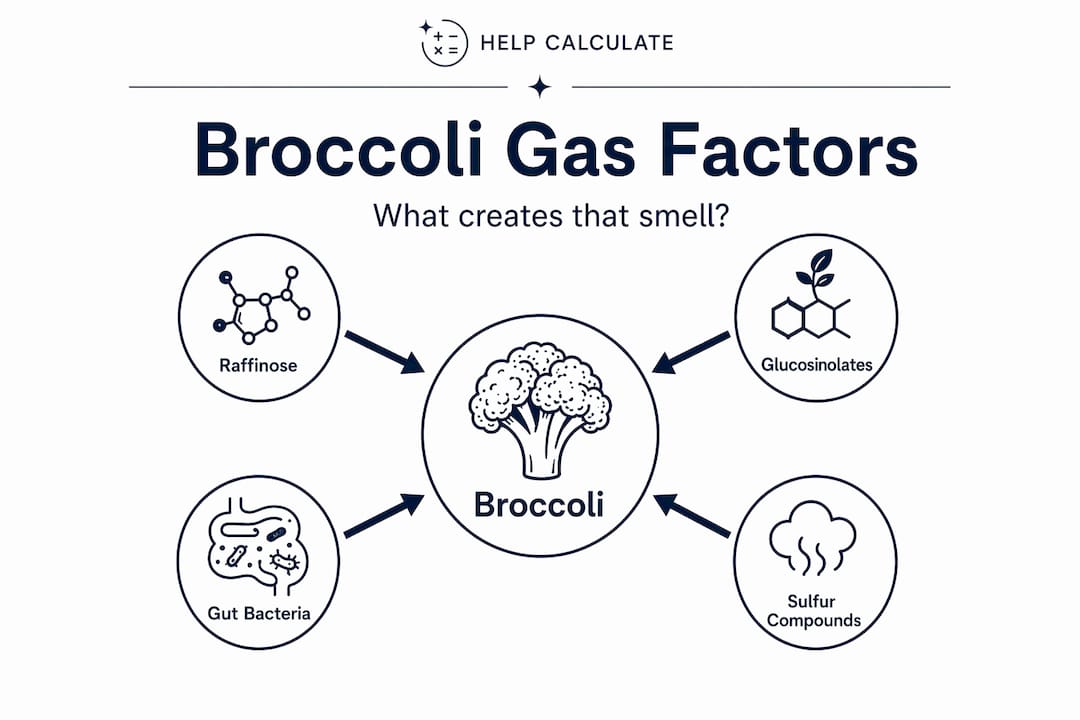
Here’s a quick breakdown of the three main culprits:
| Component | What it does | Gas produced |
|---|---|---|
| Raffinose | Undigested in small intestine, fermented in colon | Hydrogen, methane, CO2 |
| Glucosinolates (sulfur) | Broken down by gut bacteria | Hydrogen sulfide (odor) |
| Insoluble fiber | Feeds bacteria, speeds fermentation | Increased overall gas volume |
Other vegetables that cause similar effects include:
- Cabbage
- Brussels sprouts
- Cauliflower
- Kale
- Kohlrabi
All of these contain comparable levels of raffinose and sulfur compounds. If broccoli affects you, these vegetables likely will too. The intensity varies based on portion size, how the food is prepared, and your individual gut chemistry. Speaking of which, you can use BMI and calories calculators to better understand how your overall dietary intake relates to your body’s needs, which can help you make smarter choices about how much of these foods to include in a given meal.
How digestion, gut bacteria, and fiber impact the smell
We’ve seen broccoli’s role, but let’s look at why the same food affects people differently.
Two people can eat the exact same broccoli dish and have completely different experiences. One person might pass gas that clears the room, while the other barely notices a change. The reason comes down to the gut microbiome, which is the unique community of trillions of bacteria, fungi, and other microorganisms living in your digestive tract.
Your microbiome is shaped by your diet, age, stress levels, antibiotic history, and even where you grew up. Because of this, individual gut microbiome variations directly affect how much hydrogen sulfide is produced when you eat high-fiber foods like broccoli. Someone with a higher proportion of sulfur-reducing bacteria will produce more odorous gas than someone whose microbiome is dominated by methane-producing bacteria.
Fiber intake also plays a role. If you eat a consistently high-fiber diet, your gut bacteria are already well-adapted to breaking down plant material efficiently. You may produce more gas overall, but it tends to be less concentrated in any one compound. On the other hand, if you rarely eat vegetables and then consume a large portion of broccoli, your gut bacteria are caught off guard. The result is a sudden surge in fermentation activity and a much stronger odor response.

Here’s a comparison of how fiber adaptation affects gas outcomes:
| Dietary pattern | Fiber tolerance | Gas volume | Odor intensity |
|---|---|---|---|
| Consistently high fiber | High | Moderate, spread out | Milder |
| Low fiber, occasional broccoli | Low | Concentrated, sudden | Stronger |
| Gradually increasing fiber | Building | Decreasing over time | Improving |
“Introducing fiber gradually allows your gut bacteria to adapt, reducing the severity of gas and bloating over time.” This is one of the most practical and underused strategies for people who want to eat more vegetables without the discomfort.
Pro Tip: If you’re adding more broccoli or other cruciferous vegetables to your diet, start with half-cup servings and increase slowly over two to three weeks. This gives your microbiome time to adjust, and you’ll likely notice a significant reduction in both gas volume and odor.
Supporting improving gut health through diet is a gradual process. Probiotic-rich foods like yogurt, kefir, and fermented vegetables can also help diversify your microbiome, potentially reducing the intensity of sulfur-related gas over time. If you want to track your nutrition more precisely, tools that log your daily fiber and macronutrient intake can help you identify patterns between your meals and your digestive responses.
Is broccoli-smelling gas ever a problem? When to be concerned
Understanding variability is key, but when should you worry that something more than diet is causing odor?
The short answer is: almost never, when broccoli is the clear cause. The process is normal and not pathological, occurring roughly 6 to 10 hours after eating cruciferous vegetables. This timing aligns with how long it takes food to travel from your small intestine to your large intestine, where bacterial fermentation takes place. If you ate broccoli for dinner and notice unusual gas the next morning, that’s the expected timeline.
That said, there are situations where you should pay closer attention. Here are the key signs that suggest something beyond normal digestion may be happening:
- Persistent strong odor without eating broccoli or other cruciferous vegetables. If you haven’t eaten any high-sulfur foods in the past 24 to 48 hours and your gas still smells strongly of sulfur, that’s worth noting.
- Gas accompanied by abdominal pain, cramping, or bloating that doesn’t resolve. Occasional discomfort after a fiber-heavy meal is normal. Ongoing pain is not.
- Frequent loose stools or diarrhea alongside odorous gas. This combination can point to malabsorption issues or an infection.
- Sudden changes in gas patterns without dietary changes. If your digestion has been consistent and then shifts noticeably, it may be worth discussing with a healthcare provider.
Persistent odor without broccoli intake may indicate conditions like small intestinal bacterial overgrowth (SIBO) or gut dysbiosis, which is an imbalance in the gut microbiome. In these cases, the bacteria responsible for sulfur production may be overrepresented, causing odor even without the usual dietary triggers. An enzyme supplement containing alpha-galactosidase, sold under the brand name Beano, can help break down raffinose before it reaches the colon, reducing gas volume for those who are sensitive.
Pro Tip: Keep a simple food and symptom diary for one to two weeks if you’re unsure whether your gas is diet-related. Note what you ate, when you ate it, and when symptoms appeared. This information is genuinely useful if you decide to speak with a doctor or dietitian about assessing digestive wellness.
Conditions like irritable bowel syndrome (IBS) and inflammatory bowel disease (IBD) can also amplify gas and odor responses to otherwise normal foods. If you’ve been diagnosed with either condition, your tolerance for cruciferous vegetables may be lower than average, and portion management becomes especially important. Consulting with a registered dietitian who specializes in digestive health and wellness can provide personalized guidance for managing these sensitivities.
What can you do? Tips to reduce broccoli gas and odor
If you’d like to enjoy broccoli while keeping gas in check, here’s what you can do, backed by science.
The good news is that you don’t have to give up broccoli to avoid the odor. Several preparation methods and dietary habits can significantly reduce how much gas you produce and how strong it smells. Here are the most effective strategies:
-
Steam your broccoli instead of eating it raw. Steaming reduces sulfur volatility and makes raffinose easier for your gut to handle, resulting in less gas and milder odor compared to raw broccoli. Boiling works too, but it also removes more nutrients. Steaming is the best balance of digestibility and nutritional value.
-
Eat smaller portions more frequently. A large serving of broccoli delivers a concentrated dose of raffinose and sulfur to your colon at once. Splitting that same amount across two meals gives your gut bacteria a more manageable workload and reduces the fermentation surge.
-
Take an alpha-galactosidase enzyme supplement before eating. Products containing this enzyme help break down raffinose in the small intestine before it reaches the colon. This directly reduces the amount of material available for bacterial fermentation, cutting both gas volume and odor.
-
Pair broccoli with low-gas foods. Combining broccoli with foods like rice, lean proteins, or cooked carrots dilutes the concentration of gas-producing compounds in your meal. Avoid pairing it with other high-sulfur or high-raffinose foods like beans, cabbage, or eggs in the same sitting.
-
Drink more water throughout the day. Adequate hydration supports smooth digestion and helps fiber move through your system at a healthy pace. Dehydration slows digestion and can increase the time fermentable material spends in your colon, potentially worsening gas.
-
Chew thoroughly and eat slowly. Chewing breaks down plant cell walls before food even reaches your stomach, giving digestive enzymes a better chance to work. Eating quickly also means swallowing more air, which adds to overall gas volume.
Pro Tip: If you use nutrition planning tips to structure your weekly meals, consider scheduling broccoli on days when you have time to prepare it properly, such as steaming rather than eating it raw from a salad bar. Small preparation choices have a measurable impact on how your body responds.
You can also explore meal planning tools to build balanced weekly menus that include cruciferous vegetables in manageable amounts alongside other fiber sources, so your gut bacteria stay adapted without being overwhelmed.
Why embracing broccoli’s effects means owning your gut health
With solutions in hand, it’s time for a deeper look at what broccoli gas can teach us about our bodies and eating habits.
Here’s a perspective that most digestive health content avoids: the fact that broccoli gives you gas is not a problem to be solved. It’s information. Your digestive system is functioning correctly when it ferments fiber-rich vegetables. The odor is a byproduct of bacteria doing exactly what they’re supposed to do. Cruciferous vegetables are consistently identified as top dietary sources of sulfur compounds, and every source in the scientific literature agrees that isolated cases of broccoli-related odor are dietary in origin, not pathological.
The real issue is that many people respond to this kind of discomfort by cutting out the foods causing it. That’s the wrong move. Broccoli and its cruciferous relatives are among the most nutrient-dense foods available. They contain cancer-protective glucosinolates, folate, vitamin C, vitamin K, and fiber that feeds beneficial gut bacteria. Eliminating them to avoid an odor means trading a minor inconvenience for a genuine nutritional loss.
A smarter approach is to treat your digestive response as feedback. If a large raw broccoli salad wrecks your afternoon, that’s your gut telling you to steam it next time, reduce the portion, or take an enzyme supplement. That’s not a sign of intolerance. It’s a sign that you need to meet your body where it is. Learning your own response patterns, rather than following generic advice, is what actually moves the needle on long-term gut health.
Connect digestive health to smarter lifestyle choices
To make positive changes easier and more measurable, here’s where technology can support your digestive health journey.
Understanding what broccoli does in your gut is the first step. Turning that understanding into consistent, healthy habits is where most people get stuck. Tracking what you eat, how much fiber you’re consuming, and how your body responds gives you real data to work with instead of guesswork.

HelpCalculate.com offers a suite of free health and fitness tools that make it easy to monitor your calorie intake, calculate your BMI, and plan nutritionally balanced meals. Whether you’re adjusting fiber levels, managing portion sizes, or tracking how dietary changes affect your overall wellness, these tools give you a clear, numbers-based picture of your progress. You can also browse math and nutrition calculators to support everything from macro tracking to unit conversions in recipes. No apps to download, no subscriptions required.
FAQ
How long after eating broccoli does gas start?
Gas typically begins 6 to 10 hours after eating broccoli, which is the normal time it takes for undigested material to reach the colon and begin fermenting.
Does everyone get smelly gas from broccoli?
Not everyone reacts the same way. Individual gut microbiome variations and your personal fiber tolerance determine how much hydrogen sulfide is produced and how strong the odor becomes.
Does cooking broccoli really reduce gas and smell?
Yes. Steaming reduces sulfur volatility and makes raffinose easier to break down, resulting in noticeably less gas and a milder odor compared to eating broccoli raw.
Should I stop eating broccoli if my gas smells bad?
No. Unless you’re experiencing additional symptoms like pain or diarrhea, this is a normal, non-pathological process and broccoli remains a highly nutritious food worth keeping in your diet.
What are some other foods that cause smelly gas?
Cabbage, Brussels sprouts, cauliflower, and eggs are among the most common culprits, all sharing high sulfur content and similar fermentable carbohydrates that produce odorous gas during digestion.
Related calculators
Related posts
Health & Fitness
How to estimate body fat: Practical methods that work
Discover how to estimate body fat accurately with practical methods that reveal your true health progress. Take control of your fitness journey!
Health & Fitness
Understanding your basal metabolic rate for better results
Discover what is basal metabolic rate and how understanding it can optimize your weight and fitness goals for better results!
Health & Fitness
How Many Steps a Day Do You Actually Need? It's Not 10,000 - And the Science Behind That Number Will Surprise You
The 10,000-step goal wasn't created by doctors or researchers. It was invented to sell pedometers. The most comprehensive scientific review ever conducted has arrived at a very different, and far more forgiving, number.