
TL;DR
- •Your bathroom scale alone cannot tell you whether you are gaining muscle, losing fat, or retaining water.
- •Body fat percentage usually gives a clearer picture of health and fitness progress than weight alone.
- •Methods range from lab scans to home calipers and tape measures, each with different accuracy and convenience.
- •Using the same method under similar conditions matters most for seeing trends over time.
Your bathroom scale gives you one number, but that number alone cannot tell you whether you are gaining muscle, losing fat, or simply retaining water after a salty meal. Two people can weigh exactly the same and have body compositions that look completely different. One may carry 15% body fat with substantial lean muscle, while the other carries 35% body fat with far less. Understanding your body fat percentage gives you a far clearer picture of your actual health and fitness progress than scale weight ever could. This article walks you through the most reliable, practical methods available for estimating body fat, whether you are at home, at a gym, or ready to visit a lab.
Key Takeaways
| Point | Details |
|---|---|
| No perfect method | All practical body fat estimates are approximations, so use trends rather than fixate on one number. |
| Choose what works for you | Select a method you can use regularly and consistently for the most useful feedback. |
| Trends matter most | Tracking changes over weeks and months is far more important than any single reading. |
| Advanced tests for confirmation | Professional methods like DXA can be used to verify your results if needed. |
Understanding body fat estimation
Body composition refers to the proportion of fat mass versus lean mass (muscle, bone, organs, and fluids) in your body. Your body fat percentage (abbreviated %BF) is simply the fraction of your total weight that comes from fat. Knowing this number helps you set realistic fitness goals, monitor the effectiveness of your training and nutrition, and assess health risks linked to excess fat or very low body fat.
It is important to understand from the start that most body fat estimation methods are indirect. They produce estimates, not a single definitive true number. Only imaging and lab-based reference methods provide more direct measurements. This distinction matters because it means every method carries some margin of error. The goal is not a perfect number but a useful, consistent one.
Methods fall into two broad categories:
Reference (lab-based) methods:
- DXA (Dual-Energy X-ray Absorptiometry): considered the gold standard in clinical and research settings
- Hydrostatic weighing: uses water displacement to measure body density
- Air displacement plethysmography (Bod Pod): uses air displacement in a sealed chamber
- Multi-compartment models: combine data from multiple measurement technologies
Field and home methods:
- Bioelectrical impedance analysis (BIA): used in smart scales and handheld devices
- Skinfold calipers: pinch measurements at specific body sites
- Tape measure circumference methods: uses body measurements and formulas
- Body mass index (BMI): height and weight only, does not directly measure fat
Reference-quality body composition measurement is typically done with DXA in clinical labs, along with hydrostatic weighing, air displacement, and multi-compartment methods. These lab approaches are more accurate but also more expensive and less accessible. Field methods trade some precision for convenience, which is a perfectly reasonable trade-off for most fitness purposes.
If you want a quick starting point before reading further, a body fat calculator using standard circumference measurements can give you a useful first estimate in minutes. You can also browse a broader set of health and fitness calculators to complement your tracking.
| Method | Category | Accessibility | Estimated Cost |
|---|---|---|---|
| DXA scan | Reference | Low (clinic/lab) | $50 to $200+ |
| Hydrostatic weighing | Reference | Low (lab) | $25 to $75 |
| Bod Pod | Reference | Low (lab/university) | $25 to $75 |
| BIA smart scale | Field | High (home) | $20 to $150 |
| Skinfold calipers | Field | Medium (gym/home) | $5 to $30 |
| Tape measure | Field | High (home) | Free to $10 |
The most common methods: Pros, cons, and what you’ll need
With a sense of the landscape, let's look specifically at how to choose and use each method in practice.
Tape measure (circumference method)
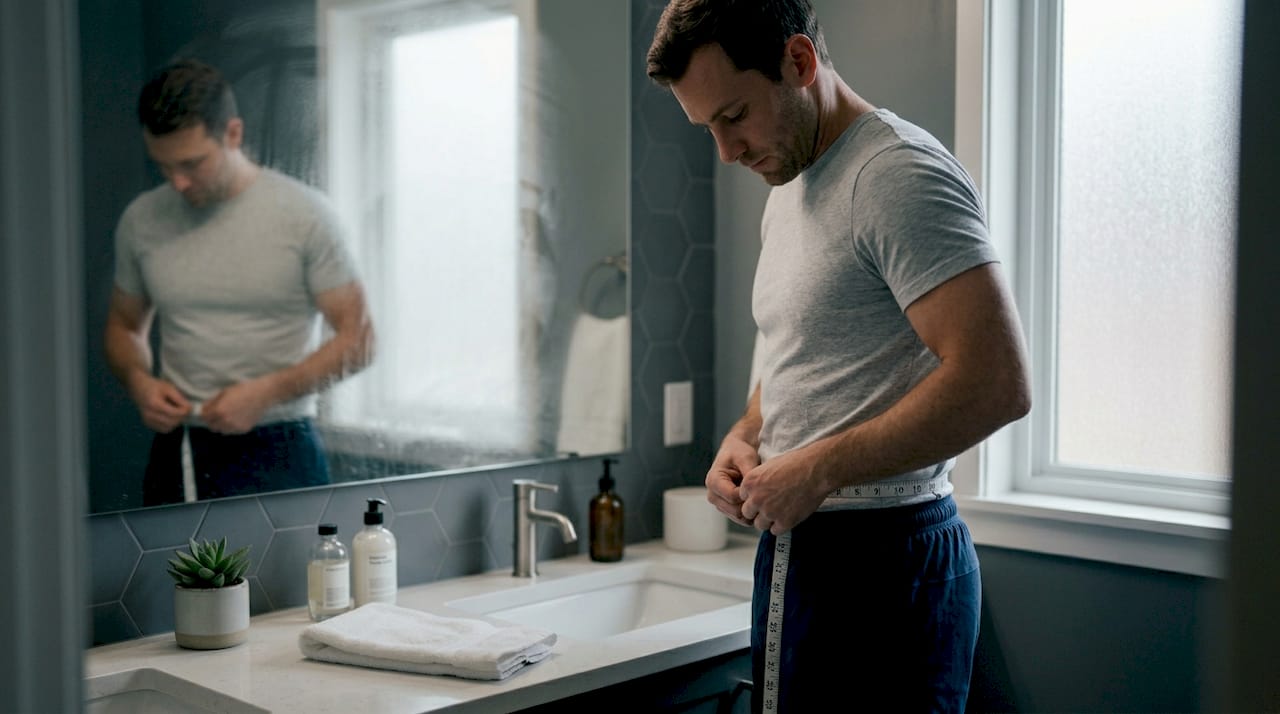
This method uses measurements of specific body sites, such as the waist, hip, neck, and forearm, and plugs them into a validated formula. The U.S. Navy formula is one of the most widely used. You need only a flexible measuring tape and a calculator. The method is free, repeatable, and requires no special equipment. The main limitation is that it does not account for differences in how people distribute fat or build muscle. Someone with a naturally large bone structure may get a slightly skewed result.
Skinfold calipers
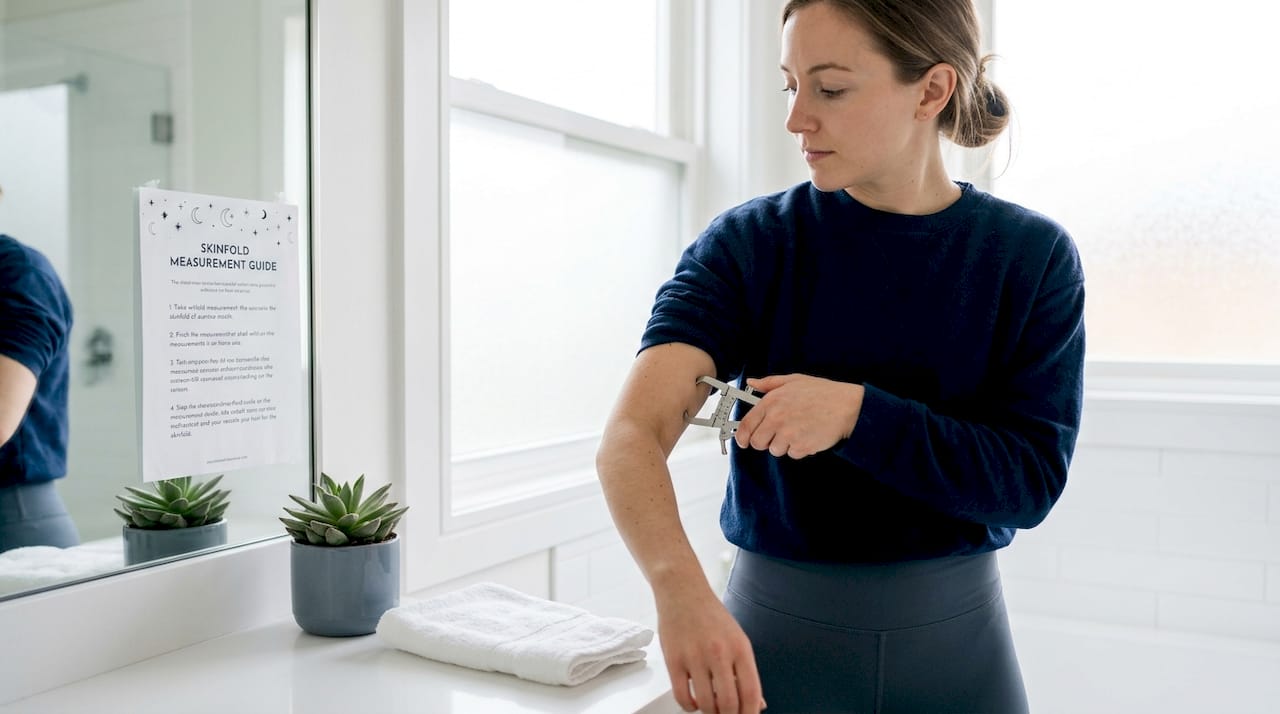
A caliper measures the thickness of pinched skin folds at specific anatomical sites, typically three to seven locations depending on the protocol. Jackson-Pollock three-site and seven-site protocols are the most commonly referenced. Results feed into formulas that estimate body density, then %BF. Skinfold equations can differ from DXA, and accuracy may vary by age and sex, with only moderate agreement in some populations, including older adults. That said, when performed consistently by the same trained person, calipers are a reliable tracking tool.
BIA scales and devices
Bioelectrical impedance analysis sends a very small electrical current through your body. Fat conducts electricity differently than muscle and water, so the device estimates your body fat percentage based on the resistance it measures. A 2023 study found that BIA, Bod Pod, and hydrostatic weighing all underestimated %BF compared to DXA, with significant Bland-Altman limits of agreement. BIA is highly sensitive to hydration, recent food intake, exercise, and even temperature. Do not use a BIA scale right after a workout or after a large meal.
DXA, hydrostatic weighing, and Bod Pod
These lab methods are the benchmark against which all field methods are validated. DXA is particularly informative because it distinguishes fat, lean mass, and bone mineral density at the regional level (for example, showing how fat is distributed between your trunk and limbs). If you want the most accurate single measurement available, a DXA scan at a local health clinic is your best option. Many universities and sports medicine clinics offer this service at a reasonable cost.
Pro Tip: If cost is a concern, use a tape measure method consistently at home and budget for one DXA scan per year to calibrate your estimates against a reference standard.
Here is a quick comparison of what each method requires and where it falls short:
| Method | What you need | Key limitation |
|---|---|---|
| Tape measure | Flexible tape, formula | Less sensitive to muscle vs. fat changes |
| Skinfold calipers | Calipers, trained hand | Technique-dependent; varies by population |
| BIA scale | Smart scale | Sensitive to hydration, time of day |
| DXA | Clinic appointment | Cost, accessibility |
| Hydrostatic weighing | Lab with water tank | Requires full submersion, not widely available |
| Bod Pod | Lab with air chamber | Limited availability, appointment required |
Our body fat calculator uses circumference measurements and applies validated formulas so you can get a consistent, comparable estimate each time without a lab appointment. You can find it alongside other BMI and body calculators on the site.
Step-by-step: Estimating your body fat at home
Armed with tools and methods, here's how to estimate your own body fat step-by-step.
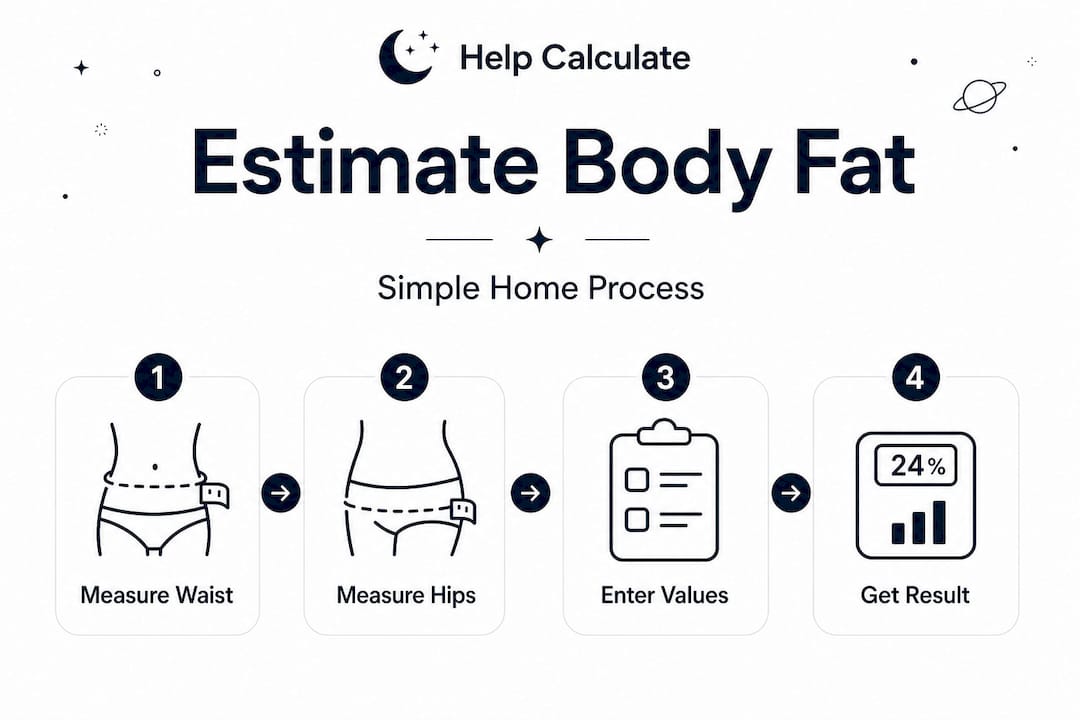
Using a tape measure (circumference method)
- Take all measurements at the same time of day, ideally in the morning after using the bathroom and before eating or drinking.
- Stand upright and relaxed. Do not flex or suck in your stomach.
- Measure your neck just below the Adam's apple, keeping the tape snug but not tight.
- Measure your waist at the narrowest point, usually about one inch above the navel.
- For women, also measure your hips at the widest point.
- Use a validated formula such as the U.S. Navy formula or enter your measurements into a trusted online body fat calculator to get your result.
- Record your measurements and the date. Repeat every four weeks.
Using skinfold calipers
- Identify the correct anatomical sites for your chosen protocol (three-site or seven-site).
- Pinch the skin and subcutaneous fat firmly between your thumb and index finger, about one centimeter above the site you intend to measure.
- Apply the caliper jaws to the pinch and release the pressure on the caliper handles. Read the measurement after two seconds.
- Take three readings at each site and use the average.
- Enter the measurements into a Jackson-Pollock formula or an equivalent tool.
Using a BIA scale
- Measure first thing in the morning, after using the bathroom but before eating or drinking.
- Stand barefoot with clean, dry feet on the scale electrodes.
- Remain still for the duration of the reading.
- Avoid measuring after exercise, after alcohol consumption, or when you are dehydrated, as these factors significantly skew results.
Pro Tip: Commercial BIA scales show systematic differences versus DXA, including underestimation in some studies. Treat single readings as directional guides and focus on the trend over multiple months rather than any single reading.
Why trends matter more than single readings
A one-time measurement, regardless of method, carries inherent uncertainty. If your scale says 28% body fat today and 27.5% in four weeks, you cannot say with certainty that you lost fat. But if it consistently reads lower over six months while your strength is increasing, that is a meaningful signal. Track regularly, use the same method and conditions each time, and let patterns guide your conclusions.
Understanding and verifying your results
After estimating your body fat, understanding what your numbers mean is just as important as getting them.
Body fat percentage ranges vary based on age, sex, and fitness level. General guidelines from health and sports science organizations suggest that for women, essential fat is around 10 to 13%, athletic range is 14 to 20%, fitness range is 21 to 24%, and values above 32% are typically associated with elevated health risk. For men, essential fat is about 2 to 5%, athletic range is 6 to 13%, fitness range is 14 to 17%, and values above 25% raise health concerns.
Here is a critical finding worth keeping in mind:
All common non-reference methods including BIA, Bod Pod, and hydrostatic weighing significantly underestimated %BF on average compared to DXA. For example, BIA averaged about 26.74%, Bod Pod about 25.04%, and hydrostatic weighing about 22.77%, while the DXA mean was 30.21%.
What this tells you practically is that your home scale or gym body fat reading is likely lower than what a DXA would show. You are probably carrying slightly more fat than your device suggests. This is not cause for alarm. It simply means you should not compare your BIA result directly to DXA-derived reference ranges without understanding that built-in gap.
Signs that a reading may be off:
- You measured shortly after intense exercise, a large meal, or alcohol
- You are noticeably more or less hydrated than usual
- The reading differs dramatically from your previous measurements with no lifestyle change
When to consider a professional assessment:
- You are working with a physician to track health-related fat distribution
- You are preparing for competitive athletics and need precise body composition data
- Your home measurements show inconsistencies that are difficult to interpret
All your numbers, whether from a scale at home or a lab-quality scan, are tools. They inform decisions. They do not define your worth or your trajectory. Use them alongside other health calculators such as calorie tracking and BMI tools for a fuller picture of your progress.
The uncomfortable truth about body fat numbers: What really matters
Here is something most fitness articles will not tell you directly. The obsession with reaching a specific body fat percentage is one of the most common ways people undermine their own progress.
Fitness culture places a lot of weight (no pun intended) on hitting a "visible abs" body fat percentage or a number that qualifies as "athletic." But the methods used to measure body fat carry enough variability that two different devices can give you results that are several percentage points apart on the same day. Chasing a single number on an imprecise instrument is not a strategy. It is frustration waiting to happen.
What matters far more is whether your habits are improving. Are you training consistently? Is your nutrition getting cleaner? Are your energy levels stable? If the answer to those questions is yes, your body composition trend will follow. The number is downstream of the behavior.
There is also an important social comparison trap worth naming. Seeing someone online report "12% body fat" using a consumer BIA scale means very little when that same person measured on DXA would likely read closer to 15 or 16%. The measurement method determines the number as much as the actual body does. Direct comparisons between people using different methods are nearly meaningless.
The most practical approach is this: pick one method, use it consistently under the same conditions, track the direction of change over months, and let that inform your adjustments. A downward trend over 12 weeks, even if the absolute number is uncertain, is genuine and actionable progress. A fluctuation of 0.5% from week to week is almost certainly measurement noise.
Take your next step with helpful calculators
If you're ready to put this knowledge into practice, HelpCalculate.com offers free tools designed to make the process clear and straightforward.

You can estimate your body fat right now using the circumference-based calculator, which applies validated formulas and gives you a result in under a minute. No equipment beyond a tape measure required. For a broader view of your health metrics, explore other health and fitness tools including BMI, calorie counters, and more. All calculators are completely free, easy to use, and built to give you quick, reliable results you can actually act on.
Recommended
FAQ
How accurate are at-home body fat estimation methods?
At-home methods are directional estimates and can differ from lab methods like DXA by several percentage points, since most body fat methods are indirect and do not produce a single definitive true number.
Which body fat estimation method is best for consistency?
Tape measure, skinfold calipers, or smart scales work well for tracking trends if you use the same method and conditions each time, because non-reference methods show systematic differences versus DXA and single readings should be treated as directional guides.
Can age and sex affect the accuracy of body fat measurements?
Yes, certain methods and equations perform differently across age groups and between sexes, since skinfold accuracy varies by age and sex with only moderate agreement in some populations, including older adults.
Is there a "normal" body fat percentage everyone should aim for?
Healthy ranges vary meaningfully by age, sex, and fitness level, so focus on your personal trend over time rather than a universal target that may not apply to your specific body and circumstances.
Related calculators
Related posts
Health & Fitness
Understanding your basal metabolic rate for better results
Discover what is basal metabolic rate and how understanding it can optimize your weight and fitness goals for better results!
Health & Fitness
How Many Steps a Day Do You Actually Need? It's Not 10,000 - And the Science Behind That Number Will Surprise You
The 10,000-step goal wasn't created by doctors or researchers. It was invented to sell pedometers. The most comprehensive scientific review ever conducted has arrived at a very different, and far more forgiving, number.