
Odds Converter
Convert between odds formats
About the Calculator
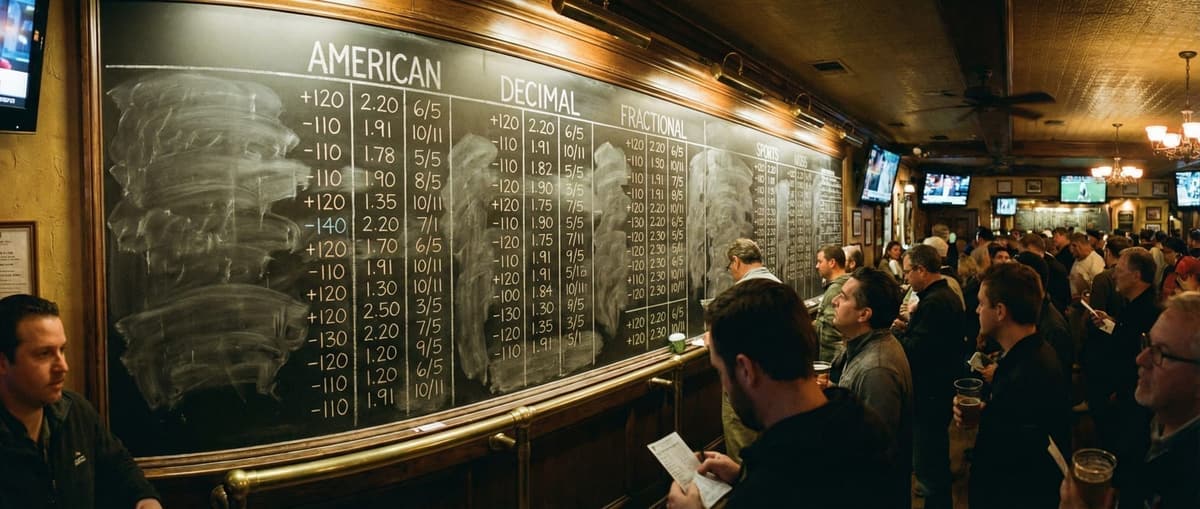
Odds can look different across sportsbooks, but the math behind them is the same. This converter translates American, decimal, and fractional odds into a single view so you can compare offers without confusion. It also shows implied probability, which helps you decide whether a price is fair. Use it when you see a line in a format you do not usually use, or when you are shopping across books for the best number. It is a fast way to align payouts, spot value, and avoid mistakes. When the odds are clear, the decision gets a lot easier. Use the Odds Converter to get a clear result you can act on right away.
How to Calculate Manually
- 1Select your input format (American, Decimal, or Fractional)
- 2Enter the odds value
- 3View the converted odds in all formats
- 4See the implied probability of winning
American Odds
-110
Decimal Odds
1.91
Fractional Odds
10/11
Implied Probability
52.38%
The Formula
Examples
Convert American -110
Decimal 1.91 = Fractional 10/11 = 52.4% probability
Convert American +150
Decimal 2.50 = Fractional 3/2 = 40% probability
Convert Decimal 2.00
American +100 = Fractional 1/1 = 50% probability
Tips & Strategies
Quick tip. Use odds converter to shop for the best value across sportsbooks
Quick tip. Implied probability helps you assess if a bet has value
Negative American odds are for favorites. positive for underdogs
Cross-check when the decision matters. Run a second scenario with rounded inputs or a different path to the same quantity so you do not rely on a single fragile chain of arithmetic.
Write down units and rounding rules next to the answer. Half of spreadsheet mistakes are inconsistent units or silent rounding; noting assumptions makes the number usable a month later.
Things Worth Knowing
- •Three different odds formats for the same bet: the same bet is written as +150 (American), 2.50 (Decimal), or 3/2 (Fractional); each format represents identical odds but American bettors use +/-, Europeans use decimals, and British use fractions, causing endless confusion internationally.
- •The "juice" or "vig" is hidden in odds: when you see -110 odds on both sides of a game (bet $110 to win $100), the sportsbook's built-in profit ("vig") is about 4.55%; if action is balanced, they are guaranteed profit regardless of outcome, collecting from losers and paying winners less.
- •Even money is not actually even: "even money" (+100 or 2.00) means you risk $100 to win $100; but with the vig included, to get even money you actually need -105 to -110 odds on both sides, so true "50/50" fair odds do not exist in real sportsbooks.
- •Implied probability reveals the truth: odds of -110 have 52.38% implied probability, but two sides at -110 total 104.76%; that extra 4.76% is the sportsbook's edge, meaning the true probability is closer to 50/50 but you are paying a premium to bet either side.
- •Odds movement matters more than value: when odds move from +200 to +150, it is not just a number change; implied probability jumped from 33.3% to 40%, meaning sharp money or injury news caused a significant market shift that recreational bettors often miss.