

TL;DR
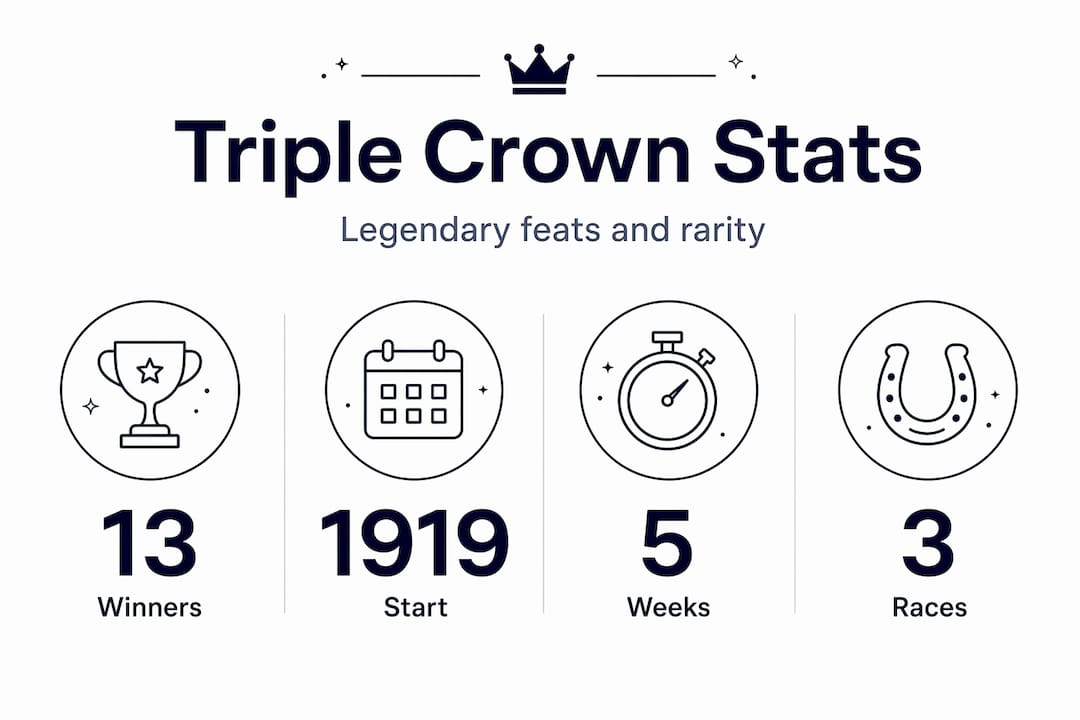
- •Winning all three Triple Crown races within five weeks is an extraordinarily rare achievement, with only 13 horses accomplishing it since 1919.
- •The demanding schedule, physical fatigue, and breeding trends favoring speed over stamina make the Belmont Stakes especially hard after the Derby and Preakness.
- •Strategic betting, race dynamics, and historical patterns can give bettors an edge in this high-stakes, high-reward stretch.
Winning one of horse racing’s biggest races is an achievement most trainers and owners only dream about. But winning all three in a single five-week stretch? That is a different category entirely. Only 13 horses have won the Triple Crown since 1919, despite more than a century of attempts by some of the finest Thoroughbreds ever bred. The gap between fame and actual achievement here is striking. This article breaks down exactly what the Triple Crown is, why it is so brutally difficult, and how fans and bettors can use that knowledge to their advantage.
Key Takeaways
| Point | Details |
|---|---|
| Triple Crown means all three | Winning the Kentucky Derby, Preakness Stakes, and Belmont Stakes in five weeks defines the Triple Crown. |
| Only 13 winners since 1919 | The Triple Crown is extremely rare, highlighting the difficulty and drama each year. |
| Fatigue and distance are hurdles | The grueling schedule and varying race lengths commonly result in upsets at the Belmont. |
| Betting value in upsets | Savvy bettors target exotics when favorites falter, especially in the Belmont Stakes. |
| Cultural and economic impact | A Triple Crown attempt boosts sport popularity, drives huge purses, and shapes the history of racing. |
What is the Triple Crown? A legendary challenge, defined
Now that the rarity and reputation of the Triple Crown are clear, let’s break down exactly what this challenge involves.
The Triple Crown is the title awarded to any three-year-old Thoroughbred that wins three specific American races in the same calendar year. According to ESPN, the Triple Crown consists of the Kentucky Derby at 1 1/4 miles, the Preakness Stakes at 1 3/16 miles, and the Belmont Stakes at 1 1/2 miles, all run within five weeks for three-year-old Thoroughbreds. That compressed schedule is the core of what makes this achievement so demanding.
The three races at a glance
| Race | Distance | Location | Tradition |
|---|---|---|---|
| Kentucky Derby | 1 1/4 miles | Churchill Downs, Louisville, KY | Run since 1875; “Run for the Roses” |
| Preakness Stakes | 3/16 miles | Pimlico Race Course, Baltimore, MD | Run since 1873; second jewel |
| Belmont Stakes | 1 1/2 miles | Belmont Park, Elmont, NY | Run since 1867; “Test of the Champion” |
Each race has its own identity, its own crowd, and its own demands. The Kentucky Derby draws the largest field, often 20 horses, making it chaotic and unpredictable. The Preakness comes just two weeks later, offering little recovery time. The Belmont, run three weeks after the Preakness, is the longest of the three and is often called the “Test of the Champion” for good reason.
Key facts every fan should know:
- All three races are restricted to three-year-olds, meaning a horse gets exactly one shot per lifetime.
- The term “Triple Crown” was first widely used in print in 1930 when Gallant Fox completed the sweep.
- A horse must win all three in the same year. Winning two in one year and one the next does not count.
- The five-week window leaves almost no margin for injury, illness, or a single bad day.
“The Triple Crown is not just about the fastest horse. It is about the most complete horse, the best team, and a little bit of fortune all arriving at the same time.”
That combination of factors is what separates the 13 champions from the hundreds that have tried.
Rarity and records: How hard is it to win the Triple Crown?
Understanding what the Triple Crown is sets the stage, but appreciating just how rarely it happens paints an even more impressive picture.
The numbers tell a stark story. Only 13 horses have won since 1919, and a 37-year drought stretched from Affirmed’s win in 1978 all the way to American Pharoah’s breakthrough in 2015. During those nearly four decades, fans watched horse after horse win the first two races only to fall short at Belmont.
Triple Crown attempts vs. completions
| Era | Notable attempts | Completions |
|---|---|---|
| 1919 to 1948 | Multiple | 8 winners |
| 1949 to 1977 | Several near-misses | 3 winners |
| 1978 to 2014 | 13 horses won first two | 0 winners |
| 2015 to present | American Pharoah, Justify | 2 winners |
The near-miss rate at the Belmont is especially telling. 18 horses won the first two races but lost the third, including some of the most dramatic upsets in racing history. Birdstone, a 36-to-1 longshot, defeated Smarty Jones in 2004 in front of a crowd expecting a coronation. That result shocked bettors and cemented the Belmont’s reputation as a race where favorites go to lose.
The most common reasons sweeps fail include:
- Physical fatigue from running three demanding races in five weeks.
- Fresh competition entering at the Belmont from horses that skipped the Derby or Preakness.
- Distance jump from 1 3/16 miles at Pimlico to 1 1/2 miles at Belmont, a significant increase.
- Tactical interference from rival trainers who enter horses specifically to disrupt the pace.
- Injury or soreness that surfaces after the physical toll of the first two races.
The 37-year drought is particularly instructive. It was not that no great horses ran during that period. Seattle Slew, Affirmed, and later horses like Real Quiet and Charismatic all had legitimate shots. The combination of factors above simply proved too much, race after race.
Why is it so tough? Fatigue, distance, and the five-week gauntlet
The records show how rare a win really is, but what actually causes so many favorites to stumble at the finish?
The tight five-week schedule tests speed, stamina, and recovery in ways that expose even the most talented horses. A horse running the Kentucky Derby on the first Saturday in May is back on the track at Pimlico just 14 days later. Then, 21 days after that, it faces the longest race of its life at Belmont.
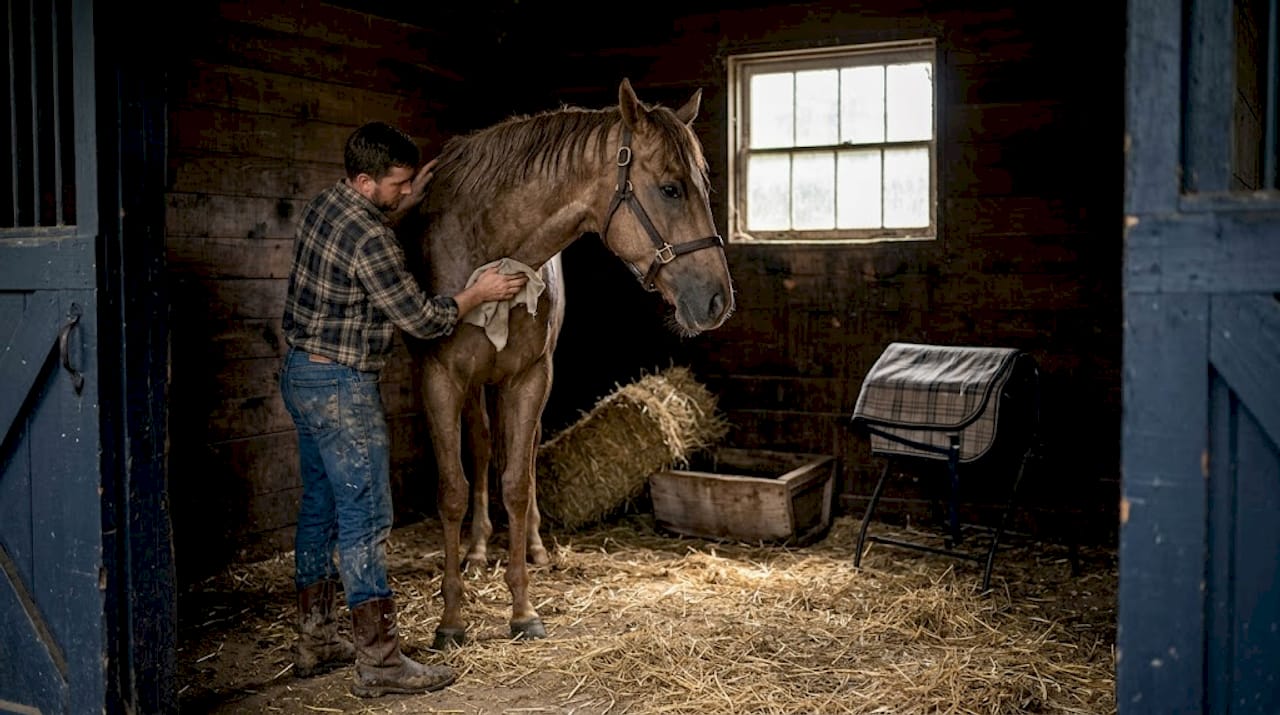
Consider what that means physically. A three-year-old Thoroughbred is still maturing. Its bones, tendons, and cardiovascular system are under enormous stress during peak training and competition. Three hard races in five weeks push those systems to their limits, and any weakness tends to show up in the final furlongs at Belmont.
The modern breeding trend toward speed over stamina makes this worse. Breeders have spent decades selecting for explosive early speed, which wins shorter races and commands higher stud fees. The result is a population of elite Thoroughbreds that are faster than ever at six furlongs but less equipped for the grinding 12-furlong test at Belmont.
Key barriers to completing the sweep:
- Recovery time is minimal. Two weeks between Derby and Preakness is not enough for full muscular recovery.
- Belmont’s distance is genuinely different. The extra quarter-mile compared to the Preakness may seem small, but at racing speeds it exposes stamina deficits quickly.
- Fresh horses are a real threat. Trainers who skip the first two races can have a well-rested horse ready to run the race of its life at Belmont.
- Psychological pressure affects the team. Trainers, jockeys, and owners all feel the weight of history, which can influence race-day decisions.
Pro Tip: When evaluating a potential Triple Crown contender heading into Belmont, look at the horse’s breeding on the dam’s (mother’s) side. Horses with stamina-oriented bloodlines on both sides are significantly better equipped to handle the distance than pure speed horses.
Betting mechanics and Triple Crown strategy
Now that you know why the challenge is so intense, here is how it all plays out from the betting window.
Triple Crown races offer some of the most varied and potentially rewarding wagering opportunities in all of American sports betting. Understanding the bet types and the strategic angles specific to these races gives you a real edge.
Core bet types explained
- Win: Your horse finishes first. Simple, but the hardest to hit consistently.
- Place: Your horse finishes first or second. Lower payout, higher probability.
- Show: Your horse finishes in the top three. Safest, but smallest return.
- Exacta: You pick the first and second place finishers in exact order.
- Trifecta: You pick the top three finishers in exact order. Higher risk, higher reward.
- Superfecta: You pick the top four finishers in exact order. The highest-risk, highest-reward standard bet.
According to detailed Triple Crown betting strategy analysis, the smaller fields at the Preakness and Belmont compared to the Derby create better conditions for exotic wagers. With fewer horses, your trifecta and superfecta combinations are more manageable and your cost per ticket stays reasonable.
The near-miss dynamic at the Belmont is one of the most reliable strategic patterns in horse racing. 13 of 48 horses that won the first two legs failed at the Belmont, and those upsets consistently produced massive exotic payouts. Bettors who keyed on longshots in Belmont trifectas and superfectas during near-miss years have collected some of the biggest payouts in the sport.
Practical betting tips for Triple Crown season:
- Fade the exhausted favorite at Belmont. A horse that has run hard twice in five weeks is vulnerable, even if it looks dominant on paper.
- Use part-wheels in exotics. Instead of boxing every combination, key your top two or three choices on top and use multiple horses underneath to reduce cost.
- Watch the morning line closely. Odds shift significantly as public money floods in on the potential Triple Crown winner, creating value on other horses.
- Track workouts between races. A horse that works sharply between the Preakness and Belmont is showing good recovery. One that works sluggishly may be feeling the cumulative toll.
Pro Tip: The Preakness often draws horses that skipped the Derby specifically to be fresh for this spot. These “fresh shooters” are worth tracking in your betting strategies because they can disrupt the Derby winner’s path to the sweep at a price.
It is also worth understanding the sports betting risks involved before committing significant money to any single race. Triple Crown events generate enormous public betting interest, which compresses odds on favorites and inflates value on alternatives.
The Triple Crown’s impact: Fame, money, and sport evolution
Beyond the races themselves, Triple Crown seasons reshape the sport entirely.
When a horse enters the Belmont with a chance at the sweep, the entire sports world pays attention. Viewership for the 2004 Belmont reached 21.9 million viewers when Smarty Jones attempted the sweep, compared to just 3.8 million for a recent Belmont without a Triple Crown bid. The 2025 Kentucky Derby itself peaked at 19.6 million viewers, illustrating how much the narrative drives audience numbers.
The economic ripple effects are substantial:
- Breeding fees skyrocket for Triple Crown winners. American Pharoah commanded stud fees of $200,000 per breeding after his 2015 sweep.
- Sponsorship and TV revenue surge during potential sweep years, benefiting the entire industry.
- Tourism spikes at host cities, particularly Louisville for the Derby and New York for the Belmont.
- Merchandise and memorabilia markets expand significantly around horses chasing history.
The cultural and historical weight of the Triple Crown also drives ongoing debate about horse welfare and the wisdom of the schedule. Critics argue that asking a developing three-year-old to run three grueling races in five weeks prioritizes tradition over animal welfare. Supporters counter that the races are the pinnacle of the sport and that modern veterinary care has improved horse safety considerably.
Secretariat’s 1973 Belmont Stakes win remains the defining image of the Triple Crown’s power. His 31-length margin of victory, in a world-record time of 2:24, was not just a win. It was a performance so far beyond the competition that it still stands as the benchmark against which every subsequent champion is measured.
“Secretariat’s Belmont was not just a race. It was a demonstration of what a perfect horse, perfectly prepared, can achieve under the most demanding conditions in the sport.”
Why beating the Triple Crown is even harder than it looks
Having covered the what and why, it is worth getting direct about the hidden truths that only close observers tend to recognize.
The popular narrative around the Triple Crown focuses on the horse. Find a great horse, win the races. That framing misses most of what actually determines the outcome. The real factors are the synergy between genetics, training decisions, race-day tactics, and the behavior of rival connections. A great horse with a poorly timed workout schedule or a jockey who misjudges pace can lose to a good horse that is perfectly managed.
Modern breeding is creating a structural problem that gets little attention. The industry’s push toward speed has produced horses that are genuinely faster than their predecessors at shorter distances. But the Belmont rewards stamina, and stamina is increasingly rare in elite bloodlines. This means the Triple Crown may actually be getting harder over time, not easier, despite better veterinary care and training science.
The psychological dimension among trainers deserves more credit. Rival trainers routinely enter horses at the Belmont with no realistic shot at winning, specifically to set a pace that will exhaust the favorite. This is legal, accepted strategy, and it works. The Triple Crown contender’s connections know it is coming and must plan accordingly. That chess match between training teams is as important as anything the horses do.
From a betting perspective, the biggest mistake most fans make is chasing the storyline. When a horse wins the first two races, public money floods in at the Belmont, compressing the favorite’s odds to levels that offer almost no value. The upset potential is structurally built into the race, not a random event. Bettors who recognize this and use Triple Crown betting angles to find value on alternatives consistently outperform those who simply back the favorite because the moment feels historic.
The near-misses are not failures. They are the engine that keeps the sport compelling. Every time a horse falls short, it resets the narrative and guarantees that the next serious contender will draw massive attention. The drama of almost is what sustains the Triple Crown’s cultural power across generations of fans.
Take your Triple Crown knowledge to the next level
Equipped with strategy, history, and perspective, you are ready to take a more analytical approach next time the Triple Crown beckons.
Understanding the races is one thing. Applying that knowledge with precision is another. HelpCalculate.com offers a full suite of betting calculators that let you model your wagers before you place them, so you know exactly what each combination costs and what it pays. Use the odds calculator to compare implied probabilities across horses and spot where the public is overvaluing the favorite.

For a more interactive experience, the betting widgets on the platform let you run scenarios in real time, comparing exotic bet structures and payout projections side by side. Whether you are building a trifecta wheel or calculating the cost of a superfecta box, these tools give you the data-driven foundation that serious bettors rely on every Triple Crown season.
FAQ
How many horses have won the Triple Crown?
Since 1919, only 13 horses have completed the Triple Crown sweep across more than a century of attempts.
Why is the Belmont Stakes so hard to win?
Its 1.5-mile distance exposes fatigue in horses that ran hard in the Derby and Preakness, and fresh competitors entering specifically for Belmont add another layer of difficulty.
What types of bets are unique to Triple Crown races?
Major options include win, place, show, exacta, trifecta, and superfecta, with exotics offering large payouts particularly when longshots upset the favorite at the Belmont.
Has viewership changed when a Triple Crown is on the line?
Yes, significantly. Belmont viewership peaked at 21.9 million during Smarty Jones's 2004 attempt, compared to 3.8 million for a Belmont without a sweep on the line.
Do Derby winners always run in the Preakness?
No. Some Kentucky Derby winners skip the Preakness, ending their Triple Crown eligibility immediately and leaving the path open for other horses to dominate the remaining races.
Recommended
Related calculators
Related posts
Betting
The Kentucky Derby Purse Is $5 Million. Here's What the Winning Owner Actually Takes Home.
The 2026 Derby purse is $5 million, but the winner's share splits across finishers, jockey, trainer, federal and Kentucky tax, and syndicates. Here is the full owner net, syndicate per-investor math, stud fees, betting taxes, and compound growth.
Betting
Masters 2026 Betting Odds Explained: What Scheffler at +550 Actually Means
A plain-English guide to reading golf betting odds, understanding implied probability, and what the numbers tell you before a ball is struck at Augusta National.
Betting
The Math Behind the Madness - March Madness Deep Dive
The odds are 1 in 9.2 quintillion. The record is 49. The prize was $1 billion. An inside look at the beautiful, brutal, and statistically absurd world of the March Madness bracket.